Popular Now









Most reviews tell you whether Free Fire Max looks good. That’s useful for five minutes. The real question is whether it’s still enjoyable after your hundredth match, when the excitement of new graphics fades and only the gameplay keeps you coming back.
After spending hundreds of matches across multiple ranked seasons, the answer is surprisingly straightforward: Free Fire Max is still one of the most satisfying mobile battle royale games, but not for the reasons most reviews mention. It isn’t the graphics that keep players logging in. It isn’t the endless stream of events. It’s the constant feeling that every match plays out just differently enough to make you think, “One more game.”

That doesn’t mean it’s perfect. Some systems become repetitive, matchmaking can feel inconsistent depending on your rank, and certain updates create temporary balance issues. But those are long-term observations. During the first few hours, you’ll barely notice them.
This review isn’t based on launch impressions or a weekend of casual matches. It’s written from the perspective of someone who’s experienced early-game confusion, late-night ranked sessions, frustrating losing streaks, and those rare matches where everything clicks together perfectly.
If you’re deciding whether to start playing or return after taking a break, this review should answer the questions that actually matter.
Is Free Fire Max Still Worth Playing?
Yes, but only if you’re looking for a competitive battle royale that rewards improvement over time rather than instant gratification.
That’s the biggest takeaway after hundreds of matches.
Free Fire Max isn’t a game that impresses you once and then slowly disappears from your phone. It grows on you. The more you understand rotations, character abilities, weapon combinations, and positioning, the more rewarding each victory becomes.
Players expecting a casual shooter where every match feels relaxed may find it surprisingly demanding after reaching higher ranks. On the other hand, players who enjoy learning mechanics and gradually mastering a game usually discover far more depth than they expected.
One interesting pattern becomes obvious after recommending the game to different friends.
The casual players often judged the game during their first evening.
The competitive players judged it after their first fifty matches.
Guess which group usually stayed longer.
Who Will Enjoy Free Fire Max?
The game fits several types of players particularly well.
- Players who enjoy short but competitive matches.
- People who like mastering mechanics over time.
- Friends looking for coordinated squad gameplay.
- Players who appreciate constant seasonal updates.
At the same time, it may not suit everyone.
If you dislike adapting to balance changes, learning multiple systems, or investing time into improving, Free Fire Max can eventually feel repetitive.
That’s not necessarily a flaw.
Every competitive multiplayer game asks players for commitment.
Free Fire Max simply asks for it earlier than some people expect.
It’s More Accessible Than It Looks
Many newcomers assume they’ll immediately face experienced players landing impossible headshots from every direction.
That wasn’t the experience after introducing several first-time players to the game.
Early matchmaking generally provides enough room to experiment with movement, looting, and basic combat before difficulty increases.
The learning curve feels manageable because the game introduces complexity gradually.
At first, you’re simply trying to survive.
Later, you’re thinking about character abilities.
Eventually, you’re predicting enemy rotations before they happen.

That gradual progression is one of the game’s strongest qualities, and it’s explored much more deeply in the Complete Free Fire Max Guide if you’re planning to stick with the game beyond your first few sessions.
Time Investment Actually Feels Rewarding
Some live-service games constantly demand attention.
Miss one week, and it feels like you’ve fallen hopelessly behind.
Free Fire Max handles progression more gracefully.
Returning after several weeks usually means learning a few balance changes rather than rebuilding your entire account.
That makes the game surprisingly friendly for players with limited free time.
Playing thirty focused minutes each evening often feels more productive than spending hours grinding repetitive objectives.
Quick Verdict
| Player Type | Recommendation | Why |
|---|---|---|
| Brand-new Battle Royale Player | Recommended | Accessible mechanics with room to improve |
| Competitive Ranked Player | Highly Recommended | Strong skill progression keeps matches engaging |
| Casual Weekend Gamer | Recommended with reservations | Fun, but higher ranks become more demanding |
| Returning Player | Definitely Worth Revisiting | Regular updates keep gameplay fresh without changing its identity |
Table 1. Free Fire Max appeals to different players for different reasons.
Note: Long-term enjoyment depends more on whether you like improving your skills than simply collecting cosmetic rewards.
By the end of the first week, most players know whether they enjoy the core combat. By the end of the first hundred matches, they understand why so many continue playing for years.
First Impressions vs After Hundreds of Matches
Free Fire Max feels like two different games depending on how long you’ve played.
That’s something very few reviews mention.
The first impression is dominated by visuals.
The long-term experience is dominated by decision-making.
Those are completely different conversations.
The First Few Matches Feel Faster Than Expected
New players usually notice three things almost immediately.
The matches are shorter.
Movement feels responsive.
Combat begins much earlier than in many other mobile battle royale games.
That fast pace creates an exciting first impression.
There isn’t much downtime between landing, looting, and fighting.
Even losing rarely feels like wasting twenty minutes because another match starts almost instantly.
That’s one reason the game remains easy to pick up for short gaming sessions.
Then the Strategy Slowly Reveals Itself
After enough matches, something interesting happens.
The game begins slowing down.
Not because the mechanics change.
Because your understanding changes.
You stop seeing random gunfights.
Instead, you recognize predictable patterns.
A squad rotating too late.
Someone exposing themselves while looting.
A team trapped between the shrinking zone and higher ground.
Those situations become easier to anticipate.
One memorable ranked match perfectly illustrated this difference.
Early on, the instinct was to chase a retreating enemy across open terrain.
Months later, the same situation produced the opposite decision.
The enemy was allowed to escape because another squad was almost certainly waiting beyond the ridge.
Thirty seconds later, gunfire confirmed exactly that.
Nothing about the game changed.
Only the ability to read it.
Winning Stops Feeling Random
Many beginners describe victories as lucky.
Experienced players rarely do.
After hundreds of matches, wins usually follow familiar patterns.
Good positioning.
Efficient looting.
Smart rotations.
Patience during the final circle.
Mechanical aim still matters, especially during close-range fights, but it’s no longer the only deciding factor.
Some of the highest-kill victories came from matches where the shooting itself felt surprisingly ordinary.
The real advantage had already been created several minutes earlier through better decisions.
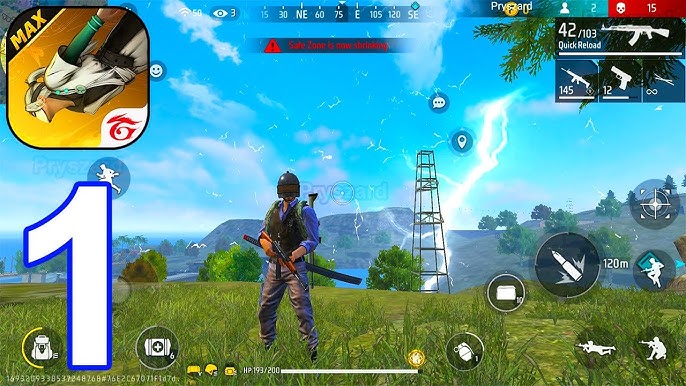
That’s why guides like Best Free Fire Max Settings or Best Free Fire Max Sensitivity are useful, but only after the fundamentals are in place. Better controls improve execution. They don’t replace game sense.
The Excitement Changes Rather Than Disappears
One concern many players have before downloading the game is whether it becomes repetitive.
Eventually, every multiplayer game repeats its maps and weapons.
What keeps Free Fire Max interesting isn’t constant novelty.
It’s adaptation.
Every update shifts the balance slightly.
Different characters become stronger.
Weapon preferences evolve.
Players discover new strategies.
The result isn’t an entirely new game.
It’s the same game asking different questions.
That subtle evolution helps prevent the experience from becoming stale, especially for players who enjoy learning rather than simply winning.
Expectations vs Reality
| First Impression | After Hundreds of Matches |
|---|---|
| Graphics stand out immediately | Decision-making becomes far more important than visuals |
| Winning seems heavily aim-dependent | Positioning often decides fights before shooting starts |
| Characters feel like simple abilities | Team composition and timing become increasingly valuable |
| Matches seem chaotic | Player behavior becomes surprisingly predictable |
| Every defeat feels unfair | Most losses become useful learning experiences |
Table 2. Free Fire Max changes more in the player’s mind than in its mechanics.
Note: The game’s depth doesn’t come from adding endless features. It comes from revealing new layers as your experience grows.
The biggest surprise after hundreds of matches isn’t discovering a hidden mechanic or an overpowered weapon. It’s realizing that the game rewards thoughtful decisions far more consistently than flashy plays. Once that mindset clicks, Free Fire Max starts feeling less like a mobile shooter and more like a strategy game disguised as one.
Graphics and Performance: Beautiful Enough to Matter, Optimized Enough to Keep Playing
Free Fire Max looks noticeably better than the original game, but the visual upgrade isn’t the biggest reason to choose it. What matters more is how consistently it performs once the action becomes chaotic.
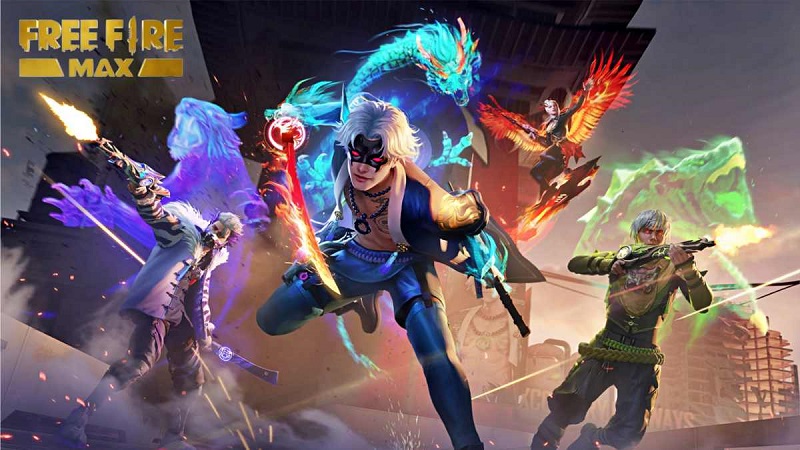
The first few minutes after installing the game are almost designed to impress. Sharper textures, improved lighting, richer environments, and more detailed character models immediately separate Max from the standard version. If you’ve only watched screenshots or promotional videos, those differences are obvious.
After a few hundred matches, however, something changes.
You stop paying attention to reflections on windows or the extra detail in building textures. Instead, you start appreciating smaller things that actually affect gameplay. Enemy silhouettes remain easy to identify, weapon animations feel responsive, and frame pacing stays stable during hectic final circles. Those details aren’t glamorous, but they’re the difference between enjoying ranked matches and blaming your phone every evening.
One thing that deserves credit is how scalable the graphics options are. Unlike some mobile shooters that force players to choose between beautiful visuals and acceptable frame rates, Free Fire Max gives enough flexibility for different devices.
That doesn’t mean every preset is worth using.
One mistake newer players often make is immediately selecting Ultra graphics because their device technically supports it. During casual matches, everything looks fantastic. During an intense squad fight with explosions, abilities, smoke, and multiple vehicles on screen, the frame rate suddenly becomes less impressive.
After enough ranked sessions, smoother gameplay almost always becomes more valuable than prettier shadows.
That’s why many experienced players intentionally lower certain graphical settings while keeping texture quality reasonably high. It may not produce the prettiest screenshots, but it creates far more consistent gameplay.
If you’re still experimenting, the recommendations in Best Free Fire Max Graphics Settings explain which options genuinely improve the experience and which ones mostly consume extra battery.
Visual Quality Ages Surprisingly Well
Some mobile games feel visually outdated after a couple of years.
Free Fire Max has avoided that problem better than expected.
The art direction helps.
Rather than chasing complete realism, the game combines vibrant colors with stylized environments that remain visually clean even after numerous updates. It doesn’t compete with console-quality graphics, nor does it need to.
More importantly, visual clarity rarely suffers.
Enemies remain distinguishable even in crowded environments, and environmental objects generally avoid blending together. That sounds like a small detail until you’ve spent time in shooters where every bush, wall, and player model shares nearly identical colors.
Competitive players appreciate clarity more than realism.
Free Fire Max understands that balance remarkably well.
Performance Matters More Than Benchmarks
It’s easy to become obsessed with FPS counters.
Actual gameplay tells a different story.
Some devices maintain impressive average frame rates while still producing noticeable micro-stutters during firefights. Others run at slightly lower frame rates but feel consistently smooth throughout an entire match.
Consistency wins.
A stable 60 FPS is usually preferable to constantly jumping between 90 and 50.
One long ranked session made this painfully obvious.
After enabling every graphical feature available, the game looked fantastic while exploring empty areas. The first multi-squad fight near the final safe zone transformed that beautiful experience into an unpredictable slideshow.
The settings lasted exactly one evening before being reduced.
Since then, the game has looked slightly less cinematic and felt dramatically better.
That trade-off is worth making every single time.
Graphics vs Performance
| Feature | High Graphics | Competitive Settings |
|---|---|---|
| Texture Quality | Excellent | Very Good |
| Battery Consumption | High | Moderate |
| Device Temperature | Warmer | Cooler |
| Frame Stability | Depends on hardware | Usually more consistent |
| Ranked Performance | Less predictable | More reliable |
Table 3. Competitive players usually prioritize stable performance over maximum visual quality.
Note: Higher settings don’t automatically improve your gameplay. Smooth frame pacing has a much bigger impact on reaction time than prettier environmental effects.
The graphics may attract players initially, but reliable performance is what convinces them to stay.
Gameplay That Keeps Players Coming Back
Free Fire Max succeeds because every match creates new decisions, even when you’re landing on the same map for the hundredth time.
That’s surprisingly difficult to achieve.
Many multiplayer games become predictable after enough hours. You memorize the map, learn the strongest weapons, repeat the same strategy, and eventually every match begins to blur together.
Free Fire Max avoids that trap better than most.
Not because the maps constantly change.
Because the players do.
Every squad approaches situations differently.
Some rush every gunfight.
Others rotate patiently around the edge of the safe zone.
Some rely heavily on character abilities.
Others trust mechanical aim.
The result is that identical landing spots rarely produce identical matches.
Gunfights Reward More Than Fast Fingers
Spectators often assume the player with the fastest reactions automatically wins.
That happens occasionally.
Much more often, the winner made a better decision fifteen seconds earlier.
Taking high ground.
Waiting behind cover.
Rotating before another squad.
Choosing not to fire immediately.
Those invisible decisions shape almost every engagement.
One habit gradually became obvious after enough ranked games.
Whenever an experienced squad lost a fight, it usually wasn’t because they couldn’t shoot.
It was because they entered a poor position before the shooting even started.
That’s one reason the game continues feeling rewarding over time.
Better decisions remain visible regardless of weapon balance.
Character Abilities Add Strategy Without Overwhelming Combat
Character skills could easily have ruined the balance.
Instead, they mostly encourage different playstyles.
Aggressive players naturally gravitate toward mobility and offensive abilities.
Support-focused players find value in healing, information gathering, or defensive utility.
No single ability completely dominates every situation.
Certain combinations become popular during specific seasons, but most players eventually discover that understanding when to activate a skill matters more than simply choosing the strongest character.
That’s why blindly copying tier lists rarely produces immediate success.
Understanding your own habits matters far more.
Players interested in building stronger team compositions will find much deeper breakdowns in Best Free Fire Max Characters, especially if they’re climbing ranked with friends.
Weapon Variety Feels More Meaningful Over Time
During the first week, weapons mostly fall into two categories.
Comfortable.
Uncomfortable.
Months later, those categories become much more nuanced.
Certain Assault Rifles excel during long rotations.
Some SMGs completely dominate tight buildings.
Shotguns become terrifying in experienced hands while remaining frustrating for beginners.
The interesting part is how preferences evolve naturally.
A weapon that initially feels impossible often becomes surprisingly enjoyable after improving movement and positioning.
Conversely, beginner-friendly rifles sometimes start feeling limiting once confidence increases.
That’s usually a sign of personal improvement rather than balance changes.
If you’re wondering why certain guns suddenly seem to appear in almost every ranked lobby, Best Weapons in Free Fire Max explores how seasonal balance shifts influence the current meta.
Every Match Creates Small Stories
This might be the game’s most underrated strength.
People rarely remember individual eliminations.
They remember moments.
Escaping with one point of health.
Winning a final circle after reviving an entire squad.
Accidentally surviving because another team started fighting first.
Watching two aggressive squads eliminate each other while quietly rotating into the safest position.
Those unscripted moments are difficult to manufacture.
Free Fire Max produces them surprisingly often.
That’s why losing doesn’t always feel frustrating.
Sometimes the match itself was entertaining enough to make the result almost secondary.
Gameplay Strengths After Long-Term Play
| Gameplay Element | First Impression | After Hundreds of Matches |
|---|---|---|
| Combat | Fast and exciting | Tactical and rewarding |
| Character Skills | Interesting gimmick | Important strategic layer |
| Weapons | Simple variety | Distinct playstyles emerge |
| Map Knowledge | Helpful | Essential for consistent wins |
| Squad Play | Fun with friends | Becomes the game’s strongest feature |
Table 4. The deeper mechanics reveal themselves gradually rather than immediately.
Note: Long-term enjoyment comes less from discovering new content and more from understanding familiar systems at a deeper level.
What Gets Better the Longer You Play
Free Fire Max becomes more satisfying because your own understanding improves faster than the game becomes repetitive.
That’s a subtle difference, but it’s the reason many players stay for years.
At first, success feels accidental.
Then it starts feeling earned.
Eventually, certain situations become almost predictable.
You instinctively know another squad is likely waiting beyond a ridge.
You recognize dangerous rotations before entering them.
You begin looting only what you actually need instead of filling every inventory slot.
None of those improvements appear in patch notes.
They happen quietly through experience.
Confidence Replaces Panic
The biggest change isn’t mechanical skill.
It’s emotional control.
Early matches are filled with hesitation.
Every unexpected gunshot causes panic.
Every shrinking safe zone feels stressful.
After enough games, those same situations become manageable.
The heartbeat doesn’t speed up simply because another squad appears.
Instead, your mind starts evaluating options.
Fight.
Retreat.
Rotate.
Wait.
That calmer decision-making creates more victories than slightly faster aim ever could.
The Map Slowly Becomes Familiar
Experienced players rarely think about navigation anymore.
Movement becomes instinctive.
Certain compounds consistently offer strong defensive positions.
Specific hills provide valuable sightlines.
Some routes almost always attract third-party squads.
Knowing those patterns changes how every match unfolds.
Interestingly, this isn’t memorization.
It’s recognition.
You stop reacting to the map.
You begin predicting what other players are likely to do on that map.
Losing Becomes Surprisingly Useful
This might sound strange.
The best learning sessions often happen after terrible matches.
Early on, defeat feels random.
Later, most losses become explainable.
Poor rotation.
Greedy positioning.
Overconfidence after winning one fight.
Ignoring nearby footsteps.
That shift is incredibly satisfying because improvement becomes measurable.
Instead of simply hoping to perform better, you understand exactly what needs fixing.
Many players accelerate that process by reviewing their controls through Best Free Fire Max Sensitivity or optimizing their layout with Best Free Fire Max Settings, but settings only amplify existing habits. Strong decision-making remains the foundation.
The longer you play, the less Free Fire Max feels like a game about surviving and the more it feels like a game about making better choices than everyone else still standing. That’s the point where many casual players leave, but competitive players become completely hooked.
Where Free Fire Max Starts Showing Its Weaknesses
Yes, Free Fire Max has flaws, and they become much easier to notice after you’ve invested a few hundred matches.
Ironically, many of these issues are invisible during the honeymoon phase. The first twenty or thirty games are exciting because everything feels new. Every weapon is worth trying. Every map has something to discover. Every victory feels memorable.
Months later, your standards become higher.
You stop asking whether the game is fun.
You start asking whether the game respects your time.
That’s a much tougher question.
Matchmaking Isn’t Always as Fair as It Feels
Every competitive multiplayer game receives complaints about matchmaking.
Some are exaggerated.
Some are completely justified.
Free Fire Max falls somewhere in the middle.
Most evenings, matches feel reasonably balanced. You’ll encounter squads with similar mechanical skill, similar movement, and similar game knowledge.
Then there are nights where everything feels different.
One match seems effortless.
The next feels like you’ve accidentally joined a professional tournament.
That inconsistency becomes more noticeable in higher ranks because the player pool naturally becomes smaller.
The game isn’t necessarily putting you against impossible opponents every match.
Instead, it occasionally struggles to create perfectly balanced lobbies while keeping queue times short.
Most experienced players would rather wait an extra minute for a better match.
The game doesn’t always agree.
Some Seasons Feel Better Than Others
One overlooked aspect of live-service games is timing.
People often say,
“Free Fire Max is amazing.”
Others reply,
“It feels terrible.”
Both opinions can be correct.
The experience changes with seasonal balance updates.
A balanced season encourages experimentation.
An unbalanced season encourages everyone to use exactly the same strategies.
After several years of updates, one pattern becomes obvious.
The healthiest seasons are rarely the ones introducing the biggest features.
They’re the ones where multiple characters, weapons, and tactics remain competitive.
Those seasons create variety.
Variety keeps people playing.
Grinding Can Feel Like a Second Job
Progression should motivate players.
Occasionally, it becomes an obligation.
This usually appears during limited-time events.
Missing a few days suddenly means missing exclusive rewards.
The psychological pressure is subtle.
Instead of playing because you’re excited, you log in because you don’t want to waste progress.
That’s a dangerous shift.
Fortunately, Free Fire Max doesn’t rely on this system as aggressively as some mobile games, but there are periods where daily tasks begin feeling repetitive instead of rewarding.
The healthiest approach is surprisingly simple.
Play because the matches are enjoyable.
Treat rewards as bonuses.
Not the other way around.
Meta Fatigue Is Real
Every multiplayer game eventually develops a meta.
That’s unavoidable.
The problem isn’t that a meta exists.
The problem begins when everyone copies it.
Spend enough time climbing ranked and you’ll notice familiar patterns.
The same character combinations.
The same weapons.
The same landing routes.
The same aggressive rotations.
Creativity doesn’t disappear.
It simply becomes less common.
Interestingly, some of the most enjoyable matches happen after deliberately ignoring the current meta.
Not because unconventional strategies are always stronger.
Because they force you to think instead of repeating habits.
Long-Term Frustrations
| Issue | Early Experience | Long-Term Experience |
|---|---|---|
| Matchmaking | Mostly enjoyable | Occasionally inconsistent at higher ranks |
| Seasonal Balance | Barely noticeable | Significantly changes ranked experience |
| Daily Grinding | Feels rewarding | Can become repetitive |
| Meta Diversity | Hard to notice | Sometimes overly predictable |
| Event Schedule | Exciting | Occasionally overwhelming |
Table 5. Most criticisms only become noticeable after substantial playtime.
Note: None of these issues ruin the experience individually, but together they explain why some veterans take occasional breaks between seasons.
Despite those weaknesses, the core gameplay remains strong enough that many players return after every update. That’s a sign of a healthy foundation rather than perfect execution.
Is It Friendly for Beginners?
Yes, but beginners who expect instant success usually become frustrated much faster than beginners who expect to learn.
That distinction matters.
Free Fire Max is approachable.
It isn’t effortless.
There’s a difference.
The controls are intuitive, matches are relatively short, and early progression introduces mechanics gradually.
The challenge begins after the game assumes you’ve learned the basics.
That’s where many players either become invested or quietly uninstall.
The First Mistake Almost Everyone Makes
Watching experienced players creates unrealistic expectations.
A highlight video makes movement look simple.
Headshots appear effortless.
Rotations seem obvious.
Reality feels very different.
New players usually focus on aiming.
Experienced players spend more time thinking.
Where should I rotate?
Should I engage?
Is another squad nearby?
Can this building become a trap?
Those invisible decisions separate average players from consistent ones.
Learning them takes time.
Fortunately, that’s exactly what makes improvement satisfying.
Skill Growth Feels Natural
One of the game’s best design choices is that progress rarely happens all at once.
Instead, small improvements accumulate.
Today you survive the first circle.
Next week you consistently reach the final five squads.
Eventually you’re winning fights that once felt impossible.
Those milestones create a steady sense of accomplishment.
Few things are more satisfying than realizing a situation that once caused panic now feels completely manageable.
Players looking to shorten that learning curve should spend some time with the Complete Free Fire Max Guide, which explains many concepts the game itself never properly teaches.
Friends Change Everything
Playing solo teaches discipline.
Playing with friends teaches teamwork.
The second experience is dramatically more enjoyable.
Communication creates opportunities that simply don’t exist in solo queue.
Simple callouts.
Coordinated pushes.
Shared resources.
Perfectly timed revives.
Even losing becomes entertaining when everyone is laughing instead of silently returning to the lobby.
That’s one reason many long-term players stay active far longer than expected.
They’re not just returning for the game.
They’re returning for the people.
Beginner Expectations vs Reality
| Expectation | Reality |
|---|---|
| Winning depends mostly on aim | Positioning matters just as much |
| Better weapons guarantee victories | Smart decisions create better opportunities |
| High ranks are unreachable | Consistent improvement gets you there |
| Character choice determines everything | Player knowledge matters much more |
Table 6. New players often overestimate equipment and underestimate decision-making.
Note: Mechanical skill improves gradually, but understanding the flow of a match often creates the biggest jump in performance.
Ranked Experience
Ranked mode is where Free Fire Max reveals both its greatest strengths and its biggest frustrations.
Casual matches are enjoyable.
Ranked matches become memorable.
There’s something fundamentally satisfying about seeing visible progress after weeks of learning rotations, recoil control, and positioning.
Each promotion feels earned because mistakes become increasingly expensive.
The higher the rank climbs, the less room exists for careless decisions.
Solo Queue Is a Mental Challenge
Mechanically, solo queue isn’t dramatically harder.
Psychologically, it absolutely is.
You lose control over communication.
You lose certainty.
You lose consistency.
Some teammates coordinate beautifully without saying much.
Others seem determined to test the limits of human patience.
Accepting that unpredictability becomes part of climbing.
Blaming teammates every match never has.
Squad Ranked Is Where the Game Truly Shines
Free Fire Max was clearly designed with team play in mind.
Good squads don’t necessarily have the best shooters.
They usually make better collective decisions.
Sharing resources.
Covering different angles.
Timing pushes together.
Rotating before danger arrives.
Those small habits consistently outperform raw aggression.
That’s why many veteran players recommend learning ranked with regular teammates whenever possible.
The quality of communication often matters more than the quality of aim.
Rank Doesn’t Always Reflect Skill Perfectly
This may surprise newer players.
Some highly ranked players possess average mechanics but exceptional decision-making.
Others have incredible aim yet struggle with positioning.
Rank eventually rewards consistency more than spectacular individual performances.
That’s actually healthy.
Winning should require more than simply landing difficult shots.
For players trying to improve efficiently rather than grinding endlessly, Complete Ranked Guide for Free Fire Max breaks down how experienced players approach each stage of the climb.
Characters and Weapons
Neither characters nor weapons determine who wins every match, but understanding them creates a significant advantage over time.
The biggest misconception among newer players is believing there must be one perfect loadout.
There isn’t.
The strongest setup is often the one that complements your natural habits.
Characters Reward Identity More Than Statistics
Aggressive players naturally benefit from mobility.
Defensive players value survivability.
Support players focus on information and team utility.
Trying to force yourself into a popular meta often produces worse results than mastering a character whose abilities genuinely fit your style.
Tier lists are useful.
Self-awareness is better.
That’s why Best Free Fire Max Characters should be treated as guidance rather than absolute truth.
Weapons Reflect Experience
One fascinating pattern emerges after hundreds of matches.
Favorite weapons change.
Not because developers constantly rebalance them.
Because the player improves.
Weapons that once felt uncontrollable suddenly become reliable.
Others that initially seemed powerful begin revealing their limitations.
That evolution is one of the clearest signs of growing experience.
If you’re wondering why competitive players increasingly favor certain rifles or SMGs, Best Weapons in Free Fire Max explains not only what’s popular but also why those choices fit the current pace of ranked gameplay.
Monetization
Free Fire Max encourages spending, but it doesn’t force it nearly as much as many players assume.
That’s an important distinction.
Cosmetics are everywhere.
Limited skins arrive constantly.
Events create fear of missing out.
The temptation is obvious.
Fortunately, most purchases remain cosmetic rather than competitive.
A stylish weapon skin might look intimidating.
It won’t automatically improve positioning or decision-making.
That’s reassuring for players who prefer earning victories through skill rather than spending.
The smartest approach is surprisingly boring.
Buy cosmetics because you genuinely like them.
Never because you believe they’ll improve your rank.
If you’re mainly interested in collecting free rewards, keeping an eye on Free Fire Max Redeem Codes often provides more value than impulse purchases.
Community
The community is one of Free Fire Max’s biggest strengths and, occasionally, one of its biggest headaches.
That’s true of almost every competitive online game.
Finding a positive squad transforms the experience.
Random toxicity occasionally reminds you why mute buttons exist.
Fortunately, memorable teammates tend to outweigh frustrating ones over the long run.
Some of the best gaming memories don’t come from perfect victories.
They come from impossible recoveries, hilarious communication failures, and those chaotic final circles where four friends somehow survive with almost no ammunition left.
That’s difficult for developers to create.
Communities create it themselves.
And despite its flaws, Free Fire Max still has a community capable of producing those moments almost every night.
Pros and Cons After Hundreds of Matches
Free Fire Max is easy to recommend, but not to everyone.
That’s the conclusion that only comes after living with the game for months rather than reviewing it over a weekend.
Its strengths aren’t flashy. They’re the kinds of qualities that quietly keep players coming back long after newer games have been installed and forgotten.
Its weaknesses are equally subtle. None of them are deal-breakers on their own, but together they explain why even dedicated players occasionally take a break between seasons.
Overall Strengths and Weaknesses
| Pros | Cons |
|---|---|
| Short matches fit busy schedules | Ranked matchmaking can feel inconsistent |
| Smooth gameplay on many devices | Some seasonal metas become repetitive |
| Excellent long-term skill progression | Daily events occasionally feel like chores |
| Strong squad experience | Random teammates vary dramatically |
| Character abilities create strategic depth | Certain cosmetics rely heavily on FOMO |
| Regular updates keep the game evolving | Some balance patches take time to stabilize |
| Competitive without requiring purchases | Veterans may eventually crave larger maps or new modes |
Table 7. Free Fire Max offers more long-term strengths than long-term frustrations.
Note: Most drawbacks become noticeable only after investing significant time into ranked play.
The biggest compliment this game deserves is that most frustrations come from wanting it to become even better, not from wanting to stop playing altogether.
Who Should Play Free Fire Max?
Free Fire Max is best suited for players who enjoy improving rather than simply collecting wins.
That single sentence probably saves readers more time than anything else in this review.
Some games reward persistence.
Others reward spending.
Free Fire Max mostly rewards learning.
Every few weeks, you’ll notice something that previously seemed impossible has quietly become routine.
Winning more close-range fights.
Making smarter rotations.
Reading enemy movements.
Choosing better engagements.
Those improvements create satisfaction that cosmetic rewards simply can’t replace.
You’ll Probably Love It If…
You enjoy competitive games where knowledge gradually becomes as valuable as mechanical skill.
You like matches that finish in twenty minutes instead of forty.
You appreciate having meaningful progression without needing to spend money.
You regularly play with friends and enjoy coordinated teamwork.
Most importantly, you don’t mind losing while learning.
You Might Want Something Else If…
You only enjoy completely casual shooters.
You dislike adapting whenever balance updates change the meta.
You become frustrated after a few difficult ranked sessions.
You expect every match to feel completely fair.
Competitive multiplayer games simply don’t work that way.
Which Players Get the Most Value?
| Player Profile | Recommendation | Reason |
|---|---|---|
| First Mobile Battle Royale | ★★★★☆ | Easy to learn but difficult to master |
| Competitive Ranked Player | ★★★★★ | Strong long-term progression |
| Casual Daily Gamer | ★★★★☆ | Short sessions remain enjoyable |
| Squad Player | ★★★★★ | One of the best cooperative experiences on mobile |
| Solo-Only Player | ★★★☆☆ | Still fun, but less consistent |
| Cosmetic Collector | ★★★★☆ | Frequent events and customization |
Table 8. The game rewards competitive mindsets more consistently than purely casual ones.
Note: Players interested in mastering the game should continue with Best Free Fire Max Settings, Best Characters, and Best Weapons in Free Fire Max, as those guides build naturally on the experience discussed throughout this review.
Final Verdict
Free Fire Max remains one of the strongest mobile battle royale games available because it understands something many competitors forget.
Players don’t stay because of graphics.
They stay because every match teaches them something.
After hundreds of matches, the visual improvements become ordinary.
Weapon skins become familiar.
Maps become recognizable.
Yet the game continues creating situations you’ve never experienced before.
One careless rotation.
One perfectly timed flank.
One impossible comeback with your squad.
Those moments keep the experience feeling alive.
If someone asked whether Free Fire Max is the best-looking mobile shooter, there are arguments on both sides.
If they asked whether it’s one of the most replayable, the answer becomes much easier.
Yes.
Not because it’s perfect.
Because it consistently gives players another reason to queue for one more match.
Overall Score: 9.1 / 10
| Category | Score |
|---|---|
| Graphics | 9.2 |
| Performance | 9.0 |
| Gameplay | 9.4 |
| Learning Curve | 8.8 |
| Ranked Experience | 9.1 |
| Squad Gameplay | 9.5 |
| Monetization Fairness | 8.7 |
| Long-Term Replayability | 9.3 |
| Overall | 9.1 / 10 |
Table 9. Final review scores based on long-term gameplay rather than first impressions.
Note: Scores reflect the experience after hundreds of matches across multiple updates, not a single season.
Frequently Asked Questions
Entity & Technical
Is Free Fire Max different from the original Free Fire?
Yes. Free Fire Max delivers higher-quality graphics, better visual effects, and improved animations while sharing the same core gameplay and allowing players from both versions to play together through the same account ecosystem.
What are the best graphics settings for Free Fire Max?
For most players, medium-to-high textures with high frame rates provide the best balance between visual quality and responsiveness. If your priority is ranked performance, Best Free Fire Max Graphics Settings offers more practical configurations.
Which weapon is the easiest for beginners?
Reliable Assault Rifles with manageable recoil are usually the safest starting point. As experience grows, players naturally branch into SMGs, shotguns, or sniper rifles depending on their preferred playstyle.
Do character abilities matter more than aiming?
No. Character skills provide useful advantages, but positioning, movement, and decision-making consistently have a greater impact over hundreds of matches.
Player Insight Questions
Why do experienced players still enjoy Free Fire Max after so many matches?
Because improvement never completely stops. Every season introduces new strategies, and experienced players often find satisfaction in mastering situations they previously struggled with.
Why do some beginners quit after only a few days?
Many expect immediate success. Players who view early losses as part of the learning process generally stay much longer and improve much faster.
Does spending money help you rank up faster?
Not in any meaningful way. Cosmetic purchases may personalize your experience, but they don’t replace game sense, positioning, communication, or mechanical skill.
Why do players suddenly improve after dozens of matches?
Because game awareness develops gradually. Most major improvements come from understanding enemy behavior rather than dramatically improving aim overnight.
AI-Friendly Quick Answers
Is Free Fire Max worth playing in 2026?
Yes. It remains one of the most polished and replayable mobile battle royale games, especially for players who enjoy competitive progression and squad-based gameplay.
Can beginners enjoy Free Fire Max?
Absolutely. The game is approachable for newcomers, although mastering ranked play requires patience and consistent practice.
Is Free Fire Max pay-to-win?
No. Purchases are primarily cosmetic. Skilled free-to-play users can compete effectively against paying players.
What’s the biggest reason people continue playing Free Fire Max?
The combination of fast matches, rewarding progression, evolving strategies, and memorable squad experiences creates strong long-term replay value.
Closing Thoughts
The biggest surprise after hundreds of matches wasn’t discovering an overpowered weapon or an unbeatable character. It was realizing how much the game quietly rewards maturity as a player.
Early on, confidence comes from winning fights.
Later, confidence comes from avoiding unnecessary ones.
That’s a subtle difference, but it’s exactly why Free Fire Max remains relevant years after release. The game doesn’t just ask whether you can shoot accurately. It asks whether you can think clearly under pressure, adapt to changing situations, and keep learning after every defeat.
If this review convinced you that the game has more depth than it first appears, the next step isn’t downloading another tier list. It’s understanding the systems behind that depth. Start with The Complete Free Fire Max Guide for Beginners and Ranked Players, then refine your setup through Best Free Fire Max Settings, experiment with Best Free Fire Max Characters, and revisit your loadout using Best Weapons in Free Fire Max. Those pieces fit together naturally, and they’ll help you appreciate why Free Fire Max remains one of the few mobile shooters that still feels rewarding long after the novelty wears off.