Popular Now










The first day in Schedule I isn’t about getting rich. It’s about avoiding mistakes that quietly slow your progress for the next ten hours.
That’s the biggest misconception new players have. They assume the opening hours are a race to earn as much money as possible, so they rush through every task, buy the first upgrade they can afford, and wander around hoping the next objective will somehow reveal itself.
The game doesn’t reward that mindset.
Instead, it rewards players who pay attention to how every system connects. Money affects upgrades, upgrades affect production, production affects efficiency, and efficiency determines how quickly your business grows. Once that relationship clicks, the first day stops feeling overwhelming and starts feeling surprisingly logical.
One thing that stands out after multiple playthroughs is how different the first hour feels compared to the first attempt. Not because the game changes, but because priorities change. Instead of asking, “How do I make more money?” the question becomes, “How do I avoid wasting time?”
That single shift makes the rest of the game considerably easier.

If you’ve already read What Is Schedule I? Why Everyone Suddenly Started Playing It, you’ll recognize that business management—not quick profits—is the real gameplay loop. This walkthrough builds on that idea and shows how to survive your first day without developing habits you’ll regret later.
What Should You Do First?
The first thing you should do is understand the game’s rhythm instead of chasing every objective.
Schedule I throws several mechanics at you almost immediately, and it’s easy to think everything deserves equal attention. It doesn’t.
During your first day, your goal isn’t to build a successful empire. Your goal is to understand why each task exists.
When a tutorial asks you to gather resources, it isn’t simply teaching you where items are located. It’s introducing the production loop you’ll repeat for the rest of the game.
When you make your first sale, the lesson isn’t about earning cash. It’s about understanding that every dollar should eventually improve your business rather than sit unused.
Many players overlook these ideas because they’re focused on finishing objectives as quickly as possible. Ironically, slowing down during the tutorial usually leads to faster progression later.
Think of the opening hour as learning the rules of a board game. Winning doesn’t matter yet. Knowing how the pieces interact does.
If you want a complete overview of how these systems evolve throughout the game, the Schedule I Guide explains every major progression stage from beginner to late game.
Your First Hour Priorities
Trying to optimize everything during the first hour usually creates unnecessary stress.
Instead, focus on a handful of priorities that will continue paying off long after the tutorial ends.
| Priority | Why It Matters | Common Beginner Mistake |
|---|---|---|
| Learn the production loop | Everything else depends on it. | Skipping through tutorial prompts. |
| Protect your starting money | Early cash is limited. | Buying upgrades too quickly. |
| Stay organized | Good habits save hours later. | Throwing items into random storage. |
| Watch how systems connect | Business growth comes from efficiency. | Treating every task separately. |
| Finish the basics before exploring | Unlock knowledge before freedom. | Wandering the map too early. |
Table 1. The most important priorities during your first hour in Schedule I.
Note: None of these priorities are about maximizing profit. They’re about creating a strong foundation that makes future expansion much easier.
You’ll probably notice that “make as much money as possible” isn’t anywhere on that list.
That’s intentional.
Experienced players rarely worry about maximizing income on Day One because the opportunities are limited anyway. What matters is reaching Day Two with better knowledge than you had at the beginning.
The money will come naturally once the workflow improves.
Learn the Gameplay Loop Before Looking for Shortcuts
One of the easiest ways to ruin the early game is by watching optimization videos before understanding the mechanics yourself.
There’s nothing wrong with guides, but copying someone else’s strategy without understanding why it works often creates more confusion than progress.
For example, you might see a late-game production layout and assume it’s something to build immediately. In reality, that layout only works because it was designed around equipment, upgrades, and income you don’t have yet.
The smarter approach is learning the loop first.
Collect resources.
Produce goods.
Sell consistently.
Reinvest profits.
Repeat.
That cycle never really changes. The only difference is that each repetition becomes faster and more efficient.
It’s surprisingly satisfying to reach a point where routine tasks that once took several minutes now happen almost automatically.
If you’re looking for the fastest possible progression, resist the temptation to skip the learning process.
Learning why the loop works is considerably more valuable than memorizing someone else’s route.
Don’t Try to Play Perfectly
The first save isn’t supposed to be efficient.
It’s supposed to teach you.
Many players restart after making one or two mistakes because they believe they’ve permanently ruined their progress.
That almost never happens.
Schedule I is surprisingly forgiving.
Buying the wrong upgrade won’t end your run.
Taking an inefficient route across town won’t destroy your business.
Spending a little too much money won’t make recovery impossible.
In fact, recovering from those mistakes teaches far more than avoiding them entirely.
Some of the most useful lessons come from realizing, several hours later, that a purchase wasn’t actually worth it or that a different workflow could have saved countless trips across the map.
Those moments create experience that no walkthrough can replace.

Think Like a Business Owner From the Very Beginning
The easiest way to improve your first day is changing how you look at every decision.
Instead of asking:
“What’s the next mission?”
Start asking:
“What would make tomorrow easier?”
That simple question changes almost everything.
Suddenly you’re paying attention to organization instead of rushing.
You’re considering efficiency before expansion.
You’re thinking about long-term income instead of quick cash.
Those habits are exactly what separate experienced players from beginners.
Interestingly, veteran players often finish their first day with less money than newcomers expect. They haven’t been chasing every possible dollar. They’ve been building systems that generate more money automatically later.
That’s a much stronger position to be in.
By the end of your first session, the goal isn’t having the biggest business in the city. It’s having a business that’s ready to grow without constantly fighting against its own inefficiency. In the next section, we’ll look at the decisions that matter most once you finally have some cash to spend, including why your first purchases often determine how smoothly the rest of your playthrough unfolds.
Don’t Spend Your First Money Yet
Your first few dollars are significantly more valuable than the thousands you’ll earn later, so spending them too early is usually the biggest mistake new players make.
Almost everyone falls into the same trap. The moment cash starts coming in, every upgrade suddenly looks essential. Bigger equipment, more storage, better tools—it all feels like obvious progress. The problem is that not every upgrade increases your income, and some simply move your bottleneck somewhere else.
After several playthroughs, one pattern becomes obvious. Players who struggle in the mid-game rarely have a money problem. They have a spending problem.
Think about your first paycheck in Schedule I as investment capital rather than spending money.
Every purchase should answer one simple question.
“Will this save time every single day?”
If the answer is yes, it’s usually worth considering.
If the answer is “maybe” or “it looks cool,” leave it for later.
One habit that consistently pays off is letting money accumulate a little longer than feels comfortable. Sitting on cash isn’t exciting, but having enough to buy the upgrade you actually need is much better than owning three mediocre upgrades that barely improve your workflow.
The players who expand smoothly are usually the ones who skipped several tempting purchases early on.
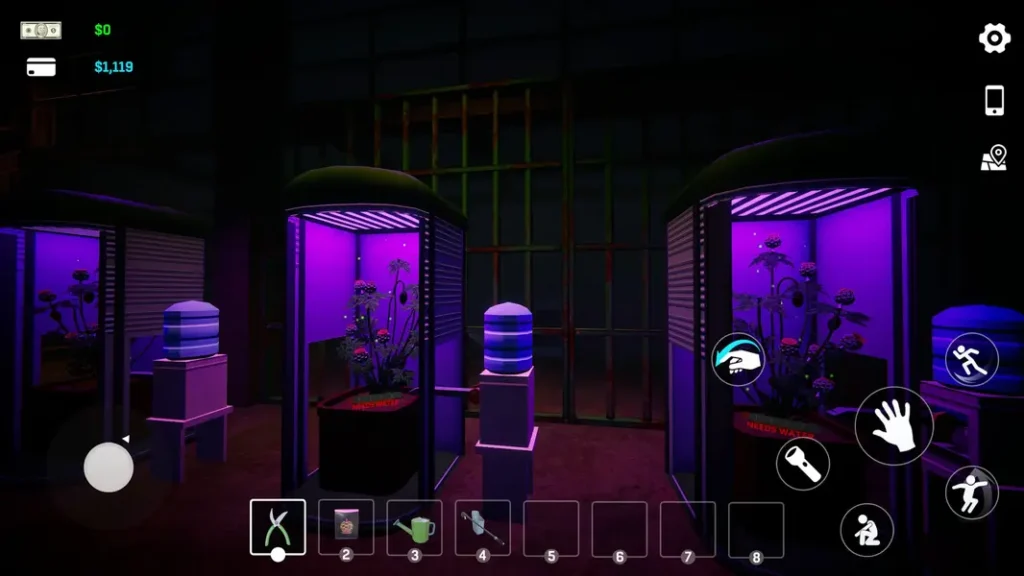
If you’re wondering which investments provide the highest long-term return, the Best Upgrade Order article breaks down every important purchase and explains why some upgrades look amazing on paper but deliver surprisingly little value during the early game.
Learn the Difference Between Busy and Productive
Being constantly occupied doesn’t necessarily mean you’re making progress.
Schedule I is brilliant at creating the illusion of productivity. You’re always collecting something, walking somewhere, organizing inventory, delivering products or checking equipment. It feels like you’re accomplishing a lot because your character is never standing still.
But after a few hours, you start noticing something.
Some sessions generate far more money with less effort.
That’s when the game quietly teaches one of its best lessons.
Efficiency beats activity.
Imagine spending ten minutes running across town because you forgot one item.
You’re busy.
You’re playing.
But nothing meaningful is happening.
Compare that with spending thirty seconds organizing your inventory before leaving.
That tiny decision prevents multiple unnecessary trips later.
The difference doesn’t seem important during the first hour.
By Day Three, it’s enormous.
Experienced players often look slower than beginners because they pause to think before moving. Ironically, those small pauses eliminate dozens of wasted actions throughout the rest of the session.
Expand Only When Your Current Business Feels Easy
Growing too quickly usually creates more problems than opportunities.
Many management games reward aggressive expansion.
Schedule I punishes it.
That’s one of the reasons the progression feels surprisingly satisfying. Every new responsibility increases complexity, and if your existing operation is already messy, adding more only multiplies the chaos.
A good rule is simple.
If your current workflow still feels stressful, you’re probably not ready to expand.
If you’re constantly asking yourself where items are stored, forgetting production steps, or struggling to maintain consistent income, another investment won’t solve those issues.
Organization will.
Expansion should feel like adding another efficient machine to a working factory, not placing another spinning plate on top of an unstable stack.
| Sign You’re Ready to Expand | Sign You Should Wait |
|---|---|
| Stable income every cycle | Income changes wildly |
| Inventory stays organized | Frequently searching for items |
| Production feels routine | Constantly forgetting the next step |
| You have spare cash after expenses | Every purchase empties your wallet |
| Mistakes are becoming rare | Small errors happen every few minutes |
Table 2. Knowing when to grow your business.
Note: Expansion isn’t tied to a specific amount of money. It’s tied to whether your current operation already runs smoothly.
This is where How to Grow Your Business Faster becomes useful. The article isn’t about rushing expansion; it’s about recognizing the right moment to scale without creating unnecessary bottlenecks.
Your First Crafting Decisions Matter More Than You Think
Crafting isn’t important because it unlocks stronger products. It’s important because it teaches resource management.
Many new players see crafting as another checklist item between making sales and earning money.
Veteran players usually see something different.
Crafting is where the economy of the game begins.
Every ingredient has an opportunity cost.
Every recipe represents an investment.
Every mistake consumes resources that could have generated future income.
That’s why blindly crafting every available option rarely works.
Instead, spend a little time understanding why a recipe exists.
Does it improve profit?
Does it reduce production time?
Does it unlock another production chain?
Or is it simply something interesting to experiment with later?
The best recipes usually aren’t the flashiest ones. They’re the ones that quietly increase efficiency without demanding constant attention.
Understanding that difference early makes every future crafting decision easier.
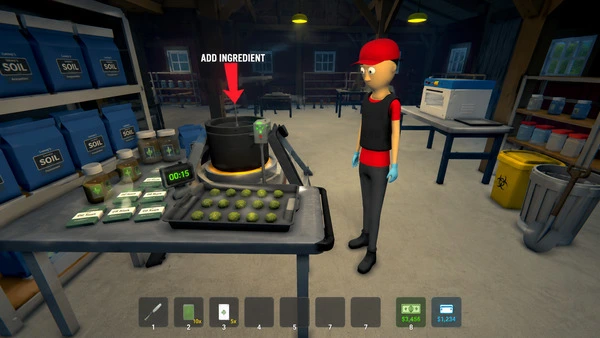
If you’re unsure which recipes deserve your resources, both Complete Crafting Guide and All Recipes List explain how different crafting paths affect long-term progression without spoiling the satisfaction of discovering the game’s systems yourself.
Build Systems Instead of Solving Problems
The strongest first-day strategy isn’t finding solutions.
It’s preventing problems from appearing in the first place.
That mindset changes almost every decision you make.
Instead of asking how to carry more items, you organize your inventory.
Instead of asking how to make emergency money, you avoid unnecessary spending.
Instead of asking how to recover from mistakes, you create routines that reduce mistakes altogether.
That’s exactly how experienced Schedule I players think.
After enough hours, individual decisions become almost automatic because they’re supported by good systems rather than constant improvisation.
It may sound less exciting than chasing quick profits or unlocking expensive upgrades, but those invisible habits quietly determine whether your business grows steadily or constantly feels like it’s one mistake away from falling apart.
By the time your first day comes to an end, the players making the fastest progress usually aren’t the ones with the biggest wallets. They’re the ones whose business already feels organized enough that tomorrow can be spent growing instead of fixing yesterday’s problems.
Learn the Map Instead of Memorizing It
The fastest players don’t have the map memorized. They understand how to move through it efficiently.
There’s a subtle difference.
Many beginners believe success comes from remembering every street, every building, and every shortcut. That sounds reasonable until the game becomes more complex. New routes appear, your business expands, and suddenly you’re traveling for completely different reasons than you were during the tutorial.
What actually saves time is understanding the geography behind your daily routine.
Every trip should accomplish more than one objective.
Need to make a delivery? Bring materials you’ll use afterward.
Heading toward a supplier? Check whether another task can be completed on the same route.
Returning to your base? Make sure you’re not carrying items that belong somewhere else.
That mindset gradually turns the city into a network instead of a maze.
One moment that usually separates experienced players from newcomers happens around the third or fourth hour. Beginners still navigate by landmarks. Veterans begin navigating by workflow.
The destination becomes less important than the sequence of actions.
That’s why exploring every corner of the city on Day One isn’t particularly valuable. Understanding how the important locations connect is far more useful.
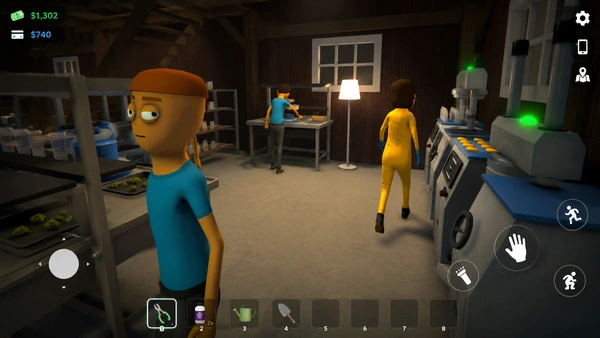
If you’re planning to optimize your routes later, the Complete Map Guide covers every important district, while Best Places to Sell explains which locations become more valuable as your business grows.
Every NPC Has a Purpose Beyond the Tutorial
The people you meet aren’t just quest markers. Most of them quietly introduce systems you’ll depend on later.
One mistake almost everyone makes is treating NPCs like temporary objectives.
Talk.
Complete task.
Move on.
That’s how many open-world games train players to think.
Schedule I works differently.
The developers use NPCs to teach relationships between mechanics rather than simply handing out missions.
Some introduce the economy.
Others expose production systems.
A few exist mainly to shape your understanding of progression.
When viewed that way, conversations become much more meaningful.
Instead of asking, “What reward do I get?”
Ask, “What system is this character trying to teach me?”
That small change makes future mechanics much easier to understand because you’ll start recognizing patterns instead of memorizing instructions.
After multiple playthroughs, it’s surprising how many useful details appear during early conversations that most players completely ignore the first time.
Those details rarely matter immediately.
They matter several hours later.
That’s excellent game design.
For players who eventually lose track of important characters, All NPC Locations becomes a useful reference without spoiling the natural pace of exploration.
Stop Walking Like a Tourist
Travel should eventually become part of your production chain rather than dead time between objectives.
The first hour naturally involves a lot of wandering because everything is unfamiliar.
By the end of your first day, however, aim to reduce unnecessary movement.
One useful habit is mentally grouping nearby activities together.
Instead of thinking,
“I’m going to deliver this product.”
Think,
“I’m making one route that happens to include a delivery.”
That tiny difference changes how you look at every trip across the city.
A surprisingly common beginner habit is returning home after every completed task.
There’s usually no reason to do that.
Experienced players often stay outside longer, completing several objectives before heading back with a full inventory and a clear purpose.
It feels slower.
In practice, it’s dramatically faster.
Mistakes Almost Everyone Makes on Day One
The first day doesn’t punish mistakes immediately.
It lets them accumulate.
That’s why some players feel completely stuck a few hours later without understanding what went wrong.
Most early problems come from habits rather than bad decisions.
| Mistake | Short-Term Result | Long-Term Consequence |
|---|---|---|
| Buying upgrades too early | Feels exciting | Weak cash flow |
| Exploring without a plan | Fun at first | Wasted travel time |
| Ignoring inventory organization | Saves a few seconds | Constant frustration later |
| Selling without planning | Quick money | Slower overall progression |
| Expanding before mastering the basics | Larger business | Lower efficiency |
Table 3. Beginner mistakes that become increasingly expensive over time.
Note: None of these mistakes will ruin a save file. They simply create habits that reduce efficiency over dozens of gameplay hours.
One interesting observation after watching new players is that they almost never lose because the game is difficult.
They lose momentum because their routine becomes exhausting.
Every trip takes longer.
Every task requires searching.
Every production cycle feels slightly disorganized.
Eventually the game starts feeling like work.
That rarely happens to players who spend a little extra time creating order during the opening hours.

If any of those habits sound familiar, 15 Beginner Mistakes to Avoid goes into much greater detail and explains how experienced players fix them before they become permanent.
Ignore Anything That Doesn’t Help Tomorrow
The best first-day strategy is knowing what not to care about.
This sounds obvious, yet it’s where many players waste the most time.
There’s always another guide recommending the perfect layout.
Someone on YouTube has already built an incredible late-game setup.
Another player claims they’ve discovered the most profitable strategy possible.
None of that matters during your first session.
Your business isn’t ready for advanced optimization.
Trying to imitate an endgame strategy with beginner resources usually creates unnecessary frustration.
Instead, concentrate on building a routine that’s simple enough to repeat without thinking.
Late-game profits come from consistency much more than clever tricks.
Ironically, players who ignore optimization videos during their first few hours often become better at optimization later because they actually understand why certain strategies work.
Knowledge built through experience lasts much longer than knowledge copied from someone else’s save.
The Goal Isn’t a Perfect Day
A successful first day isn’t measured by money.
It’s measured by confidence.
By the time you log off, you should feel comfortable opening the game tomorrow without wondering what to do next.
You should know where your income comes from.
You should understand why your business is growing.
You should have a routine that’s beginning to feel natural instead of confusing.
That’s the real milestone.
Everything else—larger profits, better equipment, bigger operations—simply grows on top of that foundation.
The final part of this guide covers how to recognize when you’re officially past the beginner stage, the subtle signs that your business is ready for faster progression, and answers the questions experienced players see repeated by newcomers every single day.
You’re Ready for Day Two When the Game Starts Feeling Smaller
The biggest sign that you’ve finished your first day successfully isn’t a bigger wallet. It’s the feeling that the city suddenly makes sense.
During the first hour, everything feels disconnected. Shops seem randomly placed, NPCs appear to have unrelated jobs, and every objective feels like a separate task.
Eventually, something clicks.
You stop thinking about individual missions and start thinking about daily routines.
You already know where you’re going before opening the map.
You instinctively organize your inventory before leaving.
You recognize which purchases can wait.
You begin planning tomorrow while finishing today’s work.
That’s the moment Schedule I changes from a survival experience into a management game.
Interestingly, this transition happens at different times for every player. Some understand the gameplay loop within two hours. Others need ten or fifteen.
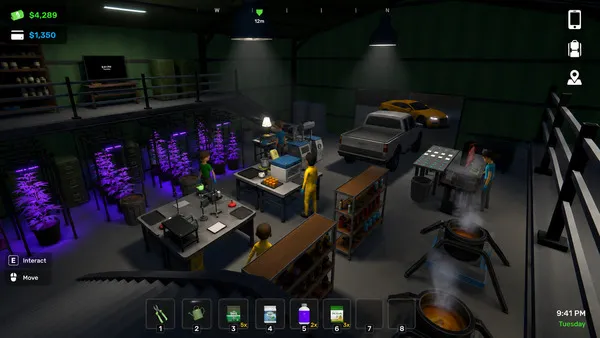
Neither approach is wrong.
Players who learn slowly often develop a deeper understanding because they spend more time experimenting instead of blindly copying guides.
If you feel comfortable making decisions without checking the tutorial every few minutes, you’ve officially graduated from the beginner phase.
That’s when articles like Advanced Strategy Guide and Best Endgame Strategy become much more valuable because you’ll understand the reasoning behind every recommendation instead of simply following instructions.
Don’t Chase the Meta Too Early
The strongest strategy on YouTube isn’t necessarily the strongest strategy for your save.
Every popular game eventually develops a “meta.” Schedule I is no different.
You’ll find videos claiming they’ve discovered the fastest money method, the perfect production layout, or an unbeatable expansion route.
Most of them work.
Some of them even work extremely well.
The problem is that many of those strategies assume you already understand the game’s economy.
Skipping directly to optimization often creates strange situations where players have efficient layouts but inefficient habits.
They know exactly what to build.
They don’t know why they’re building it.
That’s a surprisingly important distinction.
Good players can adapt when updates change mechanics.
Players who memorized a guide usually can’t.
One thing veteran players tend to do differently is testing every popular strategy themselves.
Sometimes the community is right.
Sometimes an update quietly changes balance.
Sometimes a slower strategy is actually more enjoyable over a long playthrough.
Schedule I rewards understanding more than imitation.

If you eventually want to compare different late-game approaches, Hidden Tips and Tricks and How to Progress Faster explore optimizations that remain useful even after future balance patches.
Mods Can Improve the Experience, But Learn the Vanilla Game First
Mods are fantastic once you understand what you’re trying to improve.
Installing them immediately after launching the game isn’t usually the best idea.
The vanilla experience teaches important limitations.
Inventory management feels slow for a reason.
Travel takes time for a reason.
Certain production chains feel repetitive for a reason.
Those limitations help players appreciate later improvements.
After spending enough hours with the original mechanics, you’ll naturally recognize which parts you personally want to customize.
Some players prioritize interface improvements.
Others prefer visual enhancements.
Some enjoy automation.
Others only install performance fixes.
There isn’t a universally correct mod list because everyone values different aspects of the game.
That’s why experienced players usually recommend finishing your first serious playthrough before changing anything major.
You’ll make much better choices because you’ll actually understand your own frustrations instead of someone else’s.
When that time comes, Best Schedule I Mods and How to Install Mods are good starting points for building a stable mod setup without creating compatibility issues.
The Best First-Day Players Usually Look Boring
The most impressive Schedule I players often don’t look impressive at all.
Watch someone with hundreds of hours in the game.
They’re rarely sprinting around the map.
They’re not constantly improvising.
They’re not making risky decisions every five minutes.
Everything looks… ordinary.
Every movement has a purpose.
Every purchase follows a plan.
Every trip accomplishes multiple objectives.
It’s almost boring to watch.
Until you realize they’ve quietly earned twice as much money while making half as many mistakes.
That’s the hidden lesson Schedule I teaches.
Efficiency isn’t flashy.
It’s repetitive.
The first day is where those habits begin.
If you build good habits early, the game becomes progressively easier.
If you build bad habits early, every new mechanic simply increases the amount of work you have to do.
Frequently Asked Questions
Does following a walkthrough ruin the fun in Schedule I?
No. A good walkthrough explains why decisions matter instead of telling you exactly what to do. The discovery comes from understanding the systems, not from getting lost for hours.
Is the first day the hardest part of Schedule I?
For most players, yes. The opening hours introduce almost every core mechanic while giving you very few resources to experiment with.
Should I restart if I wasted money on the wrong upgrade?
Usually not. The economy is forgiving enough that one bad purchase rarely ruins an entire save. Learning from that mistake is often more valuable than restarting.
Is there an ideal route for every player?
Not really. The best route depends on how quickly you expand, which upgrades you buy, and how comfortable you become with the map.
Why do experienced players seem to progress much faster?
Because they eliminate wasted actions. Faster progression usually comes from better routines rather than better reflexes.
Is exploration important on the first day?
Yes, but only with a purpose. Exploring while completing objectives teaches the map naturally. Wandering without a goal mostly wastes time.
Should I prioritize money or efficiency?
Efficiency almost always wins in the long run. Better routines eventually produce more money than aggressive short-term farming.
What’s the biggest mistake beginners don’t realize they’re making?
Treating every task as an isolated objective instead of part of one larger business cycle.
How many hours does it take before the game really clicks?
Most players begin understanding the business loop somewhere between three and eight hours, although everyone learns at a different pace.
When should I start using mods?
After you’re comfortable with the vanilla mechanics. Mods are far more valuable when you already understand which parts of the game you personally want to improve.
Which guide should I read after this walkthrough?
If you’re still learning the basics, Schedule I Beginner Guide is the logical next step. If your business is already generating stable income, move on to Best Ways to Make Money Fast or Complete Crafting Guide.
Is this walkthrough still useful after future updates?
Yes. Individual mechanics may change, but the principles behind efficient progression, smart spending, route planning, and business management are fundamental to how Schedule I is designed.
Final Thoughts
The first day in Schedule I isn’t a test of speed. It’s a test of observation.
Players who spend those opening hours learning the game’s logic almost always progress faster than players obsessed with finding shortcuts.
Looking back after dozens of hours, the most valuable thing learned on Day One wasn’t where to earn money or which upgrade to buy first. It was understanding that every successful business in Schedule I is built on simple routines repeated consistently.
Master those routines, and every future decision becomes easier.
Ignore them, and even the most expensive upgrades won’t fix an inefficient operation.
That may not sound like an exciting lesson, but it’s exactly why Schedule I feels so rewarding. The game doesn’t simply hand out progress. It quietly rewards players who learn to think like business owners rather than mission runners.
If you’ve reached the end of this walkthrough, you’re already ahead of most first-time players. The next step isn’t starting over. It’s opening your save, applying these ideas one at a time, and watching how much smoother your second day feels.