Popular Now









Introduction
The best starter house isn’t usually the one with the most impressive thumbnail.
It’s the one you’re still happy to live in twenty hours later.
That’s an important distinction because most players don’t search for “best starter house ideas” after spawning into a new world. They search after surviving the first few nights, collecting some iron, and realizing their temporary shelter has already become too small.
At that point, they aren’t looking for architecture lessons.
They’re looking for confidence.
They want a house that’s easy to build, doesn’t consume every resource they own, and won’t feel outdated after the next mining trip.
That’s where many galleries and YouTube tutorials fall short. They showcase beautiful builds without explaining whether those houses actually work in a long-term Survival world. A design can look incredible in a screenshot yet become frustrating after you need an enchanting room, more storage, animal pens, or a Nether portal.

This guide focuses on ideas that balance appearance with practicality.
Some are compact.
Some are surprisingly expandable.
Some sacrifice beauty for efficiency, while others prove you don’t have to choose between the two.
By the end, you’ll know which starter house fits your playstyle, your biome, and the kind of Survival world you want to create.
What Makes a Great Starter House?
A great starter house should solve problems, not create new ones.
This is where experienced players think differently.
New players often judge a house by how it looks.
Veteran players usually judge it by how it feels after dozens of hours.
Can storage expand naturally?
Is everything within easy reach?
Can future projects connect to it without tearing half the base apart?
Those questions matter far more than whether the roof has the perfect shape.
A starter house isn’t your final destination.
It’s the foundation that supports everything that comes next.
Function always beats appearance
A practical house becomes beautiful because you enjoy using it every day.
One pattern appears in almost every long-running Survival world.
The favorite house usually isn’t the fanciest one.
It’s the one that quietly makes every routine easier.
Imagine returning home after exploring for an hour.
You unload your inventory.
Smelt your ores.
Store valuable loot.
Cook food.
Repair tools.
Sleep.
Then you’re ready for another adventure within moments.
That smooth routine doesn’t happen by accident.
It’s created by thoughtful layouts rather than expensive materials.
Interestingly, many of the most memorable starter houses are nothing more than oak planks, cobblestone, and glass. Yet they remain enjoyable because everything has its place.
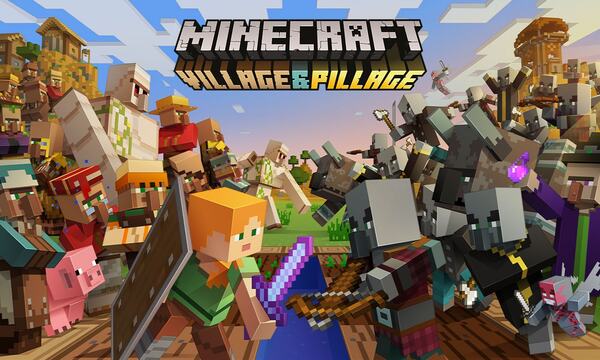
If you’re still deciding how a practical base should be planned, the Minecraft House Guide explains why layout often matters more than decoration during the early Survival game.
It should be affordable on Day One
The best starter house is the one you can realistically finish.
Minecraft has a funny way of making ambitious projects sound reasonable.
A giant medieval castle seems achievable until you realize it needs thousands of logs and several evenings of gathering materials.
Half-finished mega builds are common because players underestimate the cost.
That’s why experienced Survival players usually recommend building within your current means.
Finishing a modest cabin today creates more momentum than abandoning a massive project halfway through tomorrow.
Resources will always become easier to gather later.
Time spent feeling stuck rarely comes back.
Expansion matters more than size
A small house with room to grow will outlast a large house that’s difficult to modify.
One mistake many beginners make is trying to predict every future need.
They build huge empty rooms “just in case.”
The result often feels lifeless.
A better approach is leaving room outside rather than inside.
Need an enchanting room later?
Add one.
Need more storage?
Extend one side.
Want villagers?
Build a connected trading hall.
Minecraft rewards gradual growth.
The most satisfying Survival bases rarely appear fully finished.
They evolve one project at a time.
The right house depends on your playstyle
There’s no universally perfect starter house because players enjoy Minecraft differently.
Someone who spends hours mining values quick access to storage.
Builders often prioritize scenic locations.
Explorers may prefer compact houses that require very few resources before setting off again.
Meanwhile, Redstone enthusiasts often leave huge areas empty because they already know future automation projects are coming.
Before choosing a design, it’s worth asking yourself one simple question.
“What do I spend the most time doing in Minecraft?”
Your answer usually points toward the right house style.
Before Choosing a House Design
Choosing the right idea is more important than copying the most popular one.
Scrolling through screenshots is fun.
Building a house that fits your world is far more rewarding.
Instead of asking which design gets the most likes online, ask which design makes the most sense for your current Survival world.
That small shift completely changes the decision.
Match your house to your biome
The environment should inspire your build instead of fighting against it.
One reason naturally generated villages feel believable is that their architecture reflects the surrounding landscape.
Minecraft works the same way.
A spruce cabin looks completely at home in a Taiga forest.
A sandstone house belongs naturally in the desert.
A Japanese-inspired build feels even more striking surrounded by cherry blossom trees.
Forcing a modern white concrete mansion into the middle of a dense forest isn’t wrong.
It simply asks the landscape to support an idea that wasn’t designed for it.
When the biome and the architecture complement each other, even simple builds feel more convincing.

If you’re still searching for the right location before committing to a long-term base, the Best Minecraft Biomes guide compares environments based on resources, building potential, and Survival progression instead of appearance alone.
Think about the materials you already have
Build with today’s inventory, not tomorrow’s dreams.
Every player has watched a tutorial that looked surprisingly simple until the material list appeared.
Stacks of quartz.
Dark oak.
Copper.
Blackstone.
By the time you finish gathering everything, you’ve forgotten why you wanted that house in the first place.
Starter houses should celebrate common materials rather than hide them.
Oak.
Spruce.
Cobblestone.
Stone bricks.
Glass.
Those blocks remain useful throughout the game, which means your house ages gracefully instead of looking like a temporary compromise.
One of the nicest cabins built in a recent Survival world used almost nothing except spruce logs and cobblestone. Months later, after adding pathways, gardens, and better lighting, it still looked intentional rather than outdated.
Good design often comes from restraint.
Build for the next twenty hours, not the next twenty minutes
Every good starter house should make future upgrades easier.
It’s tempting to think only about the first night.
Experienced players think several stages ahead.
Where will the Nether portal go?
Will crops fit nearby?
Can an enchanting room connect naturally?
What happens when storage doubles?
The answers don’t need to exist immediately.
They simply need space to happen.
One habit that separates experienced Survival builders from beginners is planning connections instead of individual buildings.
Rather than imagining one perfect house, they imagine a growing base.
That mindset makes every future project feel connected instead of improvised.
The Minecraft Beginner Guide explains this progression particularly well because it shows how a tiny starter base naturally develops into a fully established Survival headquarters.
Compare ideas before committing
Choosing between house styles becomes much easier when you compare them using gameplay, not screenshots.
Instead of asking which design looks the best, compare them using practical criteria.
| House Style | Build Time | Material Cost | Easy to Expand | Best For |
|---|---|---|---|---|
| Wooden Cabin | Very Short | Low | Excellent | First Survival world |
| Stone Cottage | Short | Low | Very Good | Long-term starter base |
| Hill House | Medium | Low | Good | Players who enjoy mining |
| Lakeside House | Medium | Medium | Very Good | Farming and fishing |
| Tree House | Medium | Medium | Fair | Exploration-focused players |
Table 1. Comparing popular Minecraft starter house styles
Note: “Best” depends on your Survival goals. A compact wooden cabin may outperform a much larger build simply because it’s easier to finish, organize, and expand during the early game.
Looking at house ideas through this lens changes the conversation.
Instead of choosing the prettiest design, you’re choosing the one that will continue making your Survival world more enjoyable long after the excitement of finishing the roof has faded.
Best Starter House Ideas for Every Type of Player
The best starter house isn’t the most impressive one. It’s the one that matches how you actually play Minecraft.
One of the biggest mistakes players make is choosing a build because it looks amazing in a screenshot.
A few hours later, they discover the storage room is awkward, the roof took forever to finish, or the entire design is difficult to expand without ruining its appearance.
Instead of ranking houses by looks alone, this guide focuses on something more useful.
How well does each design perform in a real Survival world?
Simple Wooden Cabin
If you’re starting a brand-new Survival world, it’s hard to beat a wooden cabin.
Wooden cabins have survived every Minecraft update for one reason.
They simply work.
Wood is available almost immediately after spawning, making this style one of the fastest permanent homes you can build. Even after hundreds of hours in different worlds, many experienced players still begin with a cabin because it provides everything needed without slowing progression.
The biggest strength isn’t speed.
It’s flexibility.
A cabin doesn’t lock you into one architectural style. It can gradually become a mountain lodge, a medieval farmhouse, or even the entrance to an enormous underground base.
The trick is resisting the urge to make it oversized.
Most beginners build a cabin twice as large as necessary, then spend the next hour collecting logs instead of exploring.
A compact footprint leaves more time for mining, farming, and gathering resources that actually accelerate your progress.
Best for
- Brand-new Survival worlds
- Players learning basic building
- Fast early progression
Pros
- Extremely cheap
- Quick to finish
- Easy to renovate later
- Fits almost every biome
Cons
- Doesn’t stand out visually without later upgrades
- Can feel plain if every surface uses the same wood type
One habit worth copying from experienced builders is mixing oak with spruce instead of relying on a single block. Even small contrasts around windows or roof supports make a cabin feel far more intentional.
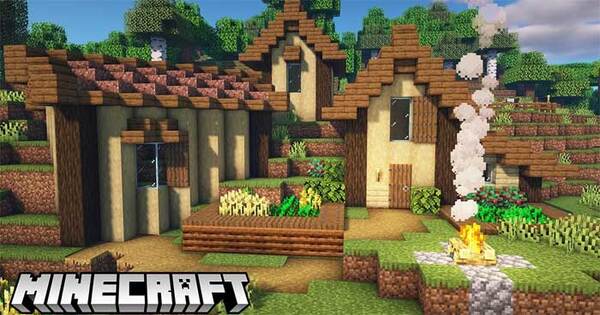
If you’re still deciding how large your first base should be, the Minecraft House Guide explains why smaller layouts often outperform larger builds during the early game.
Stone Cottage
Stone cottages age remarkably well because they still look appropriate hundreds of in-game days later.
Some starter houses feel temporary.
Stone cottages rarely do.
Stone naturally becomes more available as your world progresses, so every future upgrade blends seamlessly into the original design.
Another advantage is visual balance.
Cobblestone, stone bricks, and wooden beams create enough texture that the house already feels complete before adding decorations.
There’s also something reassuring about returning from a dangerous cave expedition to a sturdy-looking home instead of a wooden cube surrounded by Creeper craters.
While explosions damage every common building block equally, stone visually communicates permanence.
That psychological difference matters more than many players realize.
The house simply feels safer.
Many long-term Survival worlds eventually evolve around an upgraded stone cottage rather than replacing it entirely.
Hill House
A hill house is one of the smartest choices if mining is your favorite activity.
At first glance, digging into a mountain sounds less exciting than building a picturesque cabin beside a lake.
After ten hours of Survival, the advantages become obvious.
You’re already standing next to your mine.
Storage can expand endlessly underground.
Future rooms require digging rather than collecting thousands of building blocks.
Lighting also becomes much easier to control because hostile mobs have fewer exposed spawning areas around your entrance.
The mistake many players make is hiding the entire build inside the mountain.
The most attractive hill houses expose part of the structure outside.
A wooden porch.
Stone stairs.
Large windows overlooking a valley.
Those details transform what could have been a bunker into a genuine home.
Hill houses also pair naturally with automatic storage systems because underground rooms can grow almost indefinitely without affecting the exterior.
Later, when you begin collecting diamonds more efficiently, the How to Find Diamonds in Minecraft guide becomes especially useful because your mining operation already starts directly beneath your base.
Lakeside House
Players who enjoy slower, relaxing Survival sessions usually fall in love with lakeside builds.
Not every Minecraft world revolves around efficiency.
Sometimes the goal is simply enjoying the atmosphere.
Building beside water changes the rhythm of the game.
Fishing becomes convenient.
Sugar cane grows nearby.
Boats make exploration effortless.
Watching the sun rise across the water while leaving your dock never really gets old, even after years of playing.

The environment itself does much of the decorating.
Instead of forcing beauty through expensive materials, the landscape provides reflections, elevation changes, and natural scenery.
One lesson learned after experimenting with dozens of lakeside bases is to avoid building directly against the shoreline.
Leaving several blocks between the house and the water creates room for docks, gardens, pathways, and bridges later.
Those additions usually become the most memorable part of the base.
Underground Base
An underground base offers unmatched practicality if appearance isn’t your highest priority.
Some players dismiss underground homes as boring.
That usually changes after organizing hundreds of chests.
No other starter house scales quite as effortlessly.
Need another storage room?
Dig one.
Need a brewing area?
Dig another.
Need a villager trading hall?
Keep expanding.
The exterior remains compact while the interior quietly grows into something enormous.
There’s another overlooked advantage.
Because the visible portion of the base stays relatively small, decorating becomes manageable.
Instead of maintaining an entire village-sized structure, you only need to improve the entrance while letting the underground network evolve naturally.
This approach also reduces resource costs dramatically compared with large surface builds.
For players who enjoy automation later, underground layouts leave plenty of room for Redstone machines without disrupting the surrounding landscape.
Comparing the First Five Starter House Ideas
Choosing becomes much easier when every design is measured against practical Survival needs instead of appearance alone.
| House Style | Difficulty | Resource Cost | Expansion Potential | Long-Term Value | Best Choice For |
|---|---|---|---|---|---|
| Wooden Cabin | Easy | Low | Excellent | High | First Survival world |
| Stone Cottage | Easy | Low | Very Good | Excellent | Balanced progression |
| Hill House | Medium | Low | Excellent | Excellent | Mining-focused players |
| Lakeside House | Medium | Medium | Very Good | High | Relaxed exploration |
| Underground Base | Medium | Very Low | Outstanding | Excellent | Storage and automation |
Table 2. Practical comparison of five popular Minecraft starter house ideas
Note: Long-term value measures how well a design continues supporting your Survival world after dozens of gameplay hours rather than how attractive it looks immediately.
Looking across the table reveals something interesting.
The houses that receive the most attention on social media aren’t necessarily the ones that score highest for actual gameplay.
Simple designs consistently outperform complicated ones because they leave room for growth.
That’s one lesson almost every experienced Minecraft player eventually learns, usually after abandoning at least one overly ambitious starter project.
Medieval Starter House
A medieval starter house is worth building if you enjoy improving your base little by little instead of finishing everything in one afternoon.
Many players assume medieval builds are only for experts.
That isn’t really true.
What makes medieval architecture intimidating isn’t complexity. It’s scale.
A massive castle demands thousands of blocks, but a small medieval house can be surprisingly affordable. Oak, spruce, cobblestone, stone bricks, and a few lanterns already capture the style without requiring rare materials.
The biggest advantage is how naturally the design grows over time.
Today’s cottage becomes tomorrow’s blacksmith.
A small stable appears beside it.
Then a watchtower.
Eventually, what started as a starter house feels like the beginning of an entire village.
That’s one reason medieval bases remain popular years after every major Minecraft update. They encourage gradual expansion rather than forcing players to rebuild from scratch.
If you’re planning to invest dozens of hours into one Survival world, this style offers one of the smoothest transitions from early game to late game.
Japanese Starter House
A Japanese-inspired starter house rewards patience with one of the cleanest-looking early bases in Minecraft.
Few building styles feel as peaceful.
The combination of layered roofs, open porches, surrounding gardens, and balanced proportions creates an atmosphere that’s difficult to replicate with other designs.
The challenge isn’t gathering materials.
It’s maintaining restraint.
Many first attempts become too decorative because players add every detail they can think of.
Traditional Japanese-inspired builds actually rely on empty space as much as building blocks.
Wide walkways.
Open courtyards.
Small ponds.
Carefully placed trees.
Those quiet areas make the architecture stand out.
This style becomes especially beautiful inside Cherry Grove biomes, where the environment already provides much of the visual character.
Even a relatively simple house feels cinematic when surrounded by pink leaves drifting through the air.
The downside is practicality.
Adding storage, furnaces, villagers, and farms without disturbing the peaceful appearance requires planning.
Builders who enjoy aesthetics more than efficiency usually won’t mind.
Players focused purely on progression might.
Compact Modern House
Modern houses prove that clean design doesn’t always require enormous amounts of quartz.
Most YouTube tutorials unintentionally scare beginners away from modern architecture.
They showcase giant white mansions packed with expensive blocks that simply aren’t realistic for a fresh Survival world.
A compact version tells a different story.
Concrete can be replaced with smooth stone.
Quartz becomes white wool early on.
Glass remains the visual centerpiece rather than the walls themselves.
The result feels modern without demanding endless mining trips into the Nether.
One observation after building several compact modern houses is that interior organization matters more than exterior shape.
Minimalist architecture exposes every mistake.
Poor lighting becomes obvious.
Messy storage ruins the clean aesthetic immediately.
When done well, however, even a tiny modern house feels spacious thanks to large windows and open floor plans.
Which Starter House Should You Actually Choose?
The right answer depends far more on your habits than your building skill.
Whenever new players ask which house is objectively best, the question usually misses the point.
Every design solves a different problem.
A miner doesn’t experience Minecraft the same way an explorer does.
Someone building automatic farms values completely different things from someone creating screenshots for social media.
Thinking about your routine makes the decision surprisingly simple.
| If you spend most of your time… | The best choice is… | Why it works |
|---|---|---|
| Mining underground | Hill House | Easy access to caves and expansion |
| Building large projects | Wooden Cabin | Flexible starting point |
| Decorating landscapes | Japanese House | Blends naturally with scenery |
| Playing long Survival worlds | Stone Cottage | Ages exceptionally well |
| Organizing storage | Underground Base | Unlimited interior growth |
| Relaxing and exploring | Lakeside House | Beautiful surroundings and convenient transport |
| Creating a medieval village | Medieval House | Expands naturally into a larger settlement |
| Loving clean architecture | Compact Modern House | Stylish without becoming oversized |
Table 3. Matching your playstyle with the most suitable Minecraft starter house
Note: None of these choices are permanent. The strongest Survival worlds often combine several styles as they grow.
One interesting pattern appears after enough Survival worlds.
Players rarely regret choosing a simple house.
They often regret choosing one that demanded more resources than they actually had.
Common Mistakes When Picking a Starter House
Most disappointing starter houses fail because of planning mistakes, not poor building skills.
The difference matters.
Improving your building style takes practice.
Avoiding these mistakes only takes awareness.
Copying YouTube block for block
A tutorial should inspire your build, not replace your own decisions.
Large creators often build in Creative Mode with unlimited materials and perfect terrain.
Survival rarely provides either.
Trying to recreate every detail immediately usually turns an enjoyable evening into hours of repetitive resource gathering.
A better approach is borrowing ideas rather than entire blueprints.
Maybe it’s the roof design.
Perhaps it’s the window placement.
Those elements can become part of a house that’s uniquely yours.
Ironically, the most memorable Survival bases usually aren’t exact copies of anything.
Building too big too early
An unfinished mansion is less useful than a finished cottage.
Almost every experienced player has made this mistake.
The foundation seems manageable.
The walls go up.
Then the roof begins.
Suddenly the project needs another ten stacks of logs.
The excitement disappears.
Progress stalls.
Meanwhile, a modest cabin could already be protecting valuable resources while supporting exploration.
Minecraft rewards momentum.
Finishing projects creates motivation for the next one.
Ignoring future expansion
A beautiful house becomes frustrating if every upgrade requires demolition.
This mistake rarely becomes obvious during the first few hours.
It appears later.
You need an enchanting room.
Then more storage.
Then villagers.
Then automated farms.
Without room to expand, every improvement turns into another rebuilding project.
Experienced players often leave empty land around their first house for exactly this reason.
They’re planning tomorrow’s base while building today’s.
The progression described in the Minecraft Beginner Guide demonstrates this particularly well because every early structure naturally leads into the next stage instead of becoming obsolete.
Choosing style over gameplay
If your house slows your gameplay, you’ll eventually stop enjoying it no matter how beautiful it looks.
This may be the least discussed lesson among building guides.
A stunning staircase loses its charm after climbing it fifty times every session.
Huge decorative halls feel impressive until you spend several extra minutes running between storage, furnaces, and crafting tables.
Convenience quietly shapes enjoyment.
Some of the longest-lasting Survival worlds are surprisingly modest because every important workstation sits exactly where it should.
Players don’t consciously notice that efficiency.
They simply notice they’re having more fun.
That’s often the strongest compliment a starter house can receive.
How Experienced Players Actually Choose a Starter House
Veteran players don’t begin with a house. They begin with a long-term plan for the world.
That’s probably the biggest mindset shift after spending hundreds of hours in Minecraft.
Beginners often ask, “What house should I build?”
Experienced players ask, “What kind of world do I want six weeks from now?”
The house simply becomes the first chapter of a much larger story.
Look closely at long-running Survival worlds on YouTube or Reddit. The most memorable bases didn’t appear overnight. They grew naturally. A tiny cabin became a workshop. The workshop connected to a storage hall. Farms appeared nearby. Villagers moved in. Roads linked every structure together until the entire area felt like a living settlement.
Very few of those worlds started with a perfect master plan.
They started with a practical house built in the right location.
That’s why choosing a build isn’t only about architecture.
It’s about choosing a future.
Location matters more than style
Even an average house feels incredible in the right place.
Players often spend hours choosing roof designs while building beside a biome they’ll leave a few days later.
Location quietly influences every future activity.
Are caves nearby?
Can animals spawn naturally?
Is there enough flat land for farms?
Will future buildings fit without terraforming half the landscape?
A modest cabin overlooking a river with nearby forests often provides a better long-term experience than an elaborate mansion squeezed into an awkward mountain.
The world itself becomes part of the architecture.
Experienced builders don’t fight the terrain.
They use it.
Build with your next upgrade already in mind
Every finished starter house should leave you excited about the next project instead of exhausted by the previous one.
One subtle habit separates experienced Survival players from everyone else.
They rarely consider a build “finished.”
Instead, they think in phases.
Today might be storage.
Tomorrow could be a greenhouse.
Next week perhaps an enchanting tower.
That mindset removes unnecessary pressure.
The house doesn’t need to contain everything immediately because the surrounding base will eventually provide it.
One favorite approach is leaving obvious expansion points.
A bridge leading toward empty land.
A pathway ending beside an open field.
An unfinished wall that clearly invites another building later.
Those small decisions make the world feel alive because it always has somewhere to grow.
The Minecraft House Guide explores this philosophy in greater detail, especially how modular layouts prevent frustrating rebuilds once your Survival world becomes more complex.
How a Starter House Evolves Throughout a Survival World
The best starter houses rarely stay starter houses for very long.
Players sometimes think replacing their first home is a sign they planned poorly.
Often, it’s exactly the opposite.
Growth is the goal.
A healthy Survival base changes because the player changes.
What you need after two hours looks very different from what you need after fifty.
| Stage | Main Goal | What Your House Should Provide |
|---|---|---|
| First Day | Safety | Bed, crafting table, furnace, basic storage |
| Early Survival | Resource Gathering | Organized chests, food supply, smelting area |
| Mid Game | Progression | Enchanting room, brewing area, Nether portal |
| Late Game | Automation | Villager trading, Redstone systems, large storage |
| End Game | Creativity | Decorative upgrades, specialized rooms, connected districts |
Table 4. The natural evolution of a Minecraft starter house
Note: Most successful Survival worlds grow through additions instead of complete rebuilds. Expanding gradually usually saves both resources and time.
Looking at progression this way explains why compact starter houses often outperform massive builds.
They encourage evolution.
Every new project feels meaningful because the world changes alongside the player.
Final Thoughts
The perfect starter house doesn’t exist, but the perfect house for your current world absolutely does.
It’s easy to become distracted by cinematic screenshots or giant tutorial builds that require thousands of blocks.
Those projects are inspiring.
They’re just not always practical.
Some of the most enjoyable Minecraft worlds begin with nothing more than a wooden cabin beside a river.
Months later, that same cabin still stands in the middle of a thriving settlement because every expansion respected the original layout.
That’s what makes a great starter house.
Not its size.
Not its block palette.
Not even its architecture.
It creates a place you actually enjoy returning to after every adventure.
If a build encourages exploration, keeps your resources organized, and still has room to grow, it has already succeeded.
Everything else is simply decoration.
Frequently Asked Questions
Does biome choice really matter when building a starter house?
Yes. Matching your build to the surrounding biome reduces material gathering, improves visual consistency, and leaves more opportunities for natural expansion later.
Which blocks are best for a beginner-friendly starter house?
Oak planks, spruce logs, cobblestone, stone bricks, glass, and lanterns provide excellent value because they’re easy to collect and remain useful throughout the entire Survival experience.
Should I build near a village?
Usually, yes. Building close to a village makes future villager trading much easier while providing access to food, beds, and useful structures early on.
Can I build a modern house in Survival without quartz?
Absolutely. Smooth stone, white concrete, white wool, and large glass panels can create a convincing modern look long before quartz becomes practical.
Why do experienced players build smaller houses first?
Because finishing an efficient house early allows faster progression. Resources invested in mining, enchanting, and exploration usually provide greater long-term value than oversized early builds.
Is it worth copying YouTube starter houses exactly?
Not usually. Tutorials are excellent sources of inspiration, but adapting a design to your terrain, available materials, and playstyle almost always produces a better Survival base.
How large should a starter house actually be?
Large enough to support your current needs, but small enough to finish comfortably. Most players benefit more from adding new rooms later than constructing empty space on day one.
When should I replace my starter house?
You often don’t need to replace it at all. Many of the best Survival worlds simply expand the original structure into a larger base instead of abandoning it.
What is the best starter house for long-term Survival?
A compact house with affordable materials, organized storage, room for future expansion, and enough nearby space for farms and utility buildings will usually remain useful for dozens of gameplay hours.
Which starter house is easiest to expand later?
Wooden cabins, stone cottages, and hill houses are among the easiest because additional rooms blend naturally into the existing structure without requiring major redesigns.
Is a beautiful starter house more important than an efficient one?
No. An efficient layout saves time every single play session, while appearance can always be improved gradually through landscaping, better lighting, and decorative details.
What’s the biggest mistake players make when choosing a starter house?
They build for screenshots instead of gameplay. A house that looks spectacular but slows everyday Survival eventually becomes frustrating, while a practical home usually becomes more beautiful as the surrounding world grows.
Key Takeaways
If you’re still deciding which design to build, remember these principles before placing the first block.
- Choose a house that matches your playstyle instead of current trends.
- Build with materials you already have instead of waiting for perfect blocks.
- Leave plenty of room for future expansion.
- Let the surrounding biome influence your architecture.
- Focus on convenience first and decoration second.
- Think of your starter house as the beginning of a Survival base, not the finished product.
Following those ideas won’t just help you build a better starter house. They’ll help you create a Minecraft world that still feels rewarding long after the first night has passed.